Vitech Development Limited

Lower Control Arm

What Is Lower Control Arm


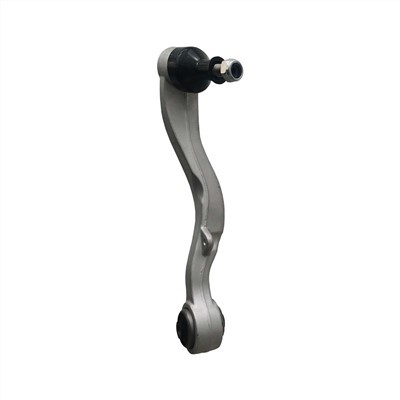
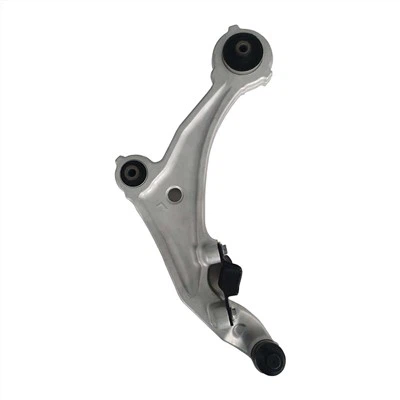
In automotive suspension, a lower control arm, also known as an A-arm, is a hinged suspension link between the chassis and the suspension upright or hub that carries the wheel. In simple terms, it governs a wheel's vertical travel, allowing it to move up or down when driving over bumps, into potholes, or otherwise reacting to the irregularities of a road surface.


Benefits of Lower Control Arm
 

Improved Wheel Alignment
Although this function of an lower control arm is often overlooked, one of the most important benefits of investing in an aftermarket upper control arm is that it allows for proper wheel alignment. With lifted vehicles like 4WDs, it can be really difficult, if not impossible, to align them back to the original factory specifications. Lower control arm provide an excellent solution to this issue in that they solve the problem by having a slightly different geometry than the factory one. The adjustable nature of these control arms not only lets you reset the factory specifications but provides greater flexibility when it comes to aligning your vehicle too. For instance, you can dial in more caster if you want to push larger wheels.


Greater Coil Clearance
Installing new coilovers on your vehicle can make a massive difference in the performance of your front suspension. Because they have larger diameter bodies, aftermarket coilovers can hold more shock fluid which is better when it comes to cooling. They also tend to have larger pistons which allow more damping control. While better cooling and damping control have their benefits, bigger shock bodies can create clearance issues for cars that still have the factory control arms installed. You probably won't notice any problems till your suspension completely collapses, and the existing control arms damage the new coilovers. Getting this fixed won't come cheap. For this reason, investing in good quality aftermarket control arms is a good idea as they provide an excellent solution to this problem as they are designed to clear larger coilovers.


Superior Quality to Factory Installed Control Arms
Like any mass-produced car part, upper control arms are built to a certain standard that is deemed good enough to be built quickly and efficiently so that car manufacturers can maintain their profits. Moreover, factory models tend to be made cheaply out of steel that provides an adequate level of strength. This level of durability might be acceptable for most people who only drive on the road, but it won't be as effective for those who enjoy off-roading adventures. Lower control arm tend to be significantly more durable than the standard stock ones. These upper control arms tend to be better designed and made out of better quality materials such as billet aluminium or Chromoly steel.


Better Balls & Joints
Aftermarket lower control arm tend to offer greater strength too because they feature better ball joints. The additional power provided by these elements means that you won't need to stress about the control arm failing. While they may wear out faster than the standard ball joints, they are significantly more robust.


Unlocking Wheel Travel
On a related note, not only are the ball joints in aftermarket control arms stronger than those in the factory-installed models, but they also tend to have a broader range of motion. This additional room for movement means that the suspension can access its full range of motion without any binding. Therefore, lower control arm essentially enable you to get every centimetre of wheel travel available out of your suspension, particularly when you also use extended travel coilovers.


First 12345 Last 1/5
Why Choose Us


Quality Assurance
In addition to the conventional measuring tools such as durometer and projector, we also have advanced measuring equipment such as ZEISS CMM, universal testing machine to meet the advanced measurement requirements of product size and material.
The professional QC team also enables us to check the quality of each batch of products in the factory to ensure the quality of each batch of products delivered.


Experience and expertise
The technicist, salesman and inspector in our team have rich professional knowledge and business experience. All of them are focused on providing the custom with products worth every penny.


Quality Services
Continuously providing product/service to customer in U.S.A, Canada, Germany, England etc. more than 20 years. We supply to many famous companies in the World like LEGRAND, LEMKEN, ABB, RHEEM, ZURN, WATTS etc.


6 Common Symptoms of a Bad Lower Control Arm
 

Noise
When the bushing or ball joint of the lower control arm wears or becomes damaged, you may hear some knocking sounds during steering. Since the sound is transmitted from the chassis to the bottom of the car, we can determine if it is a lower control arm issue based on the location of the noise. However, when traversing uneven road surfaces, the noise could also be generated by the shock absorbers.


Wheel Alignment
When the lower control arm itself is damaged, typically bent or deformed, it can result in the tires being unable to maintain proper alignment. A common situation is when a vehicle has just undergone a wheel alignment, but shortly afterward, the driver feels that the vehicle is not going straight again. The timing of alignment failure can vary depending on the severity of the bend and the material of the lower control arm.
The worst-case is; when the vehicle is handed over to a tire alignment shop, and the technician discovers the alignment failure during the road test after completing the alignment, but without knowing the cause. They re-alignment it, making the value show on the instrument “normal,” and then delivering the vehicle to the customer.


Bad Handling
As mentioned above, when alignment fails, it means that the lower control arm cannot fully control the position of the tires. Consequently, the chassis angles considered by engineers during design become failure, leading to a significant decrease in vehicle handling.


Poor Driving Stability
Deformed lower control arm can result in the inability to maximize the contact area between the tires and the road surface, leading to decreased stability, especially at high speeds.


Vibration
Since the structure inside the bushing is composed of rubber responsible for absorbing vibrations, deterioration or hardening of the rubber, a natural material, is inevitable over time. This can result in the lower control arm being unable to effectively absorb vibrations, making the driver feel a “gap” in the chassis. Additionally, damaged lower control arm may contribute to resonance within the vehicle, leading to premature wear on the body or other components.


Unresponsive Steering
The ball joint of the lower control arm allows for a 360-degree rotation. When the vehicle is turning, a damaged ball joint can result in a “sticky” or hesitant feeling, diminishing the overall driving experience.
The lower control arm is considered a safety component within the structure of an automobile. Automotive manufacturers prioritize safety in their designs, making it unlikely for the lower control arm to be used until it is completely damaged or fractured. Repair shops often overlook the condition of the lower control arm, believing that its impact is not significant.


What Should I Consider Before Buying Lower Control Arm?
沃尔沃下控制臂
萨博下控制臂
路虎下控制臂
吉普下控制臂

Compatibility
The suspension system of almost all vehicles is different from one another and this difference may even exist between different models of a particular make or even versions of the same car. This makes it necessary to choose lower control arm specific to your vehicle’s make, model, and year of manufacture.


Control Arm Material
Lower control arm are mainly built with three materials – iron, aluminium and steel. Aluminium lower control arm are lighter than other types which translate to reduced unsprung mass and lighter weight on the vehicle. Such arms can absorb noise and vibrations better due to the density of the material. Another advantage is their corrosion resistance making which allows them to be used in varied weather conditions. Therefore aluminium is ideal for performance and luxury vehicles as they provide enhanced comfort and handling properties or in places where the weather is mostly wet.
Steel lower control arm are more affordable than aluminium and generally have a long service life unless exposed to constant wet conditions. These types of lower control arm are sufficient for most compact cars and sedans that do not face harsh driving conditions.
Cast and forged iron lower control arm are sturdier than steel and can withstand heavier loads which is necessary for heavy-duty applications like trucks and pickups. They can even be lighter than steel arms for reduced unsprung weight.


Corrosion Resistance Coatings
One of the most common reasons for control arm failure is corrosion. Due to their location, the lower control arm are always exposed to the road and weather conditions making them vulnerable to rust which can significantly reduce their service life and will require more frequent replacements. To combat this, many manufacturers apply protective coatings on steel and iron lower control arm to prevent corrosion and extend component life. When buying steel or iron lower control arm it is necessary to look for resistance coatings that ensure the components will last a long time and provide a healthy service life.


Signs That Your Lower Control Arm Needs Replacing
 
01/

Clunking noise when driving over bumps

If you hear a clunking noise coming from the suspension when driving over bumps or uneven terrain, it could be a sign that the lower control arm bushings or ball joints are worn.

02/

Uneven Tyre wear

If you notice that the tread on one or more of your Tyres is wearing down faster than the others, it could be caused by worn or damaged lower control arm bushings or ball joints.

03/

Steering problems

If you notice that your steering feels loose or unstable, it could be caused by worn or damaged lower control arm bushings or ball joints.

04/

Pulling or drifting while driving

If your vehicle pulls to one side or drifts while driving, it could be caused by worn or damaged lower control arm bushings or ball joints.

05/

Suspension sag

If you notice that one corner of your vehicle appears lower than the others, it could be caused by worn or damaged lower control arm bushings or ball joints.

06/

Loose or clunking feeling when turning

If you feel a loose or clunking feeling when turning, it could be caused by worn or damaged lower control arm bushings or ball joints.


How Do Lower Control Arm Work?


Now we've established some of the main benefits for those who buy adjustable upper lower control arm, it's time to understand how exactly they work to ensure you get the most out of yours.


So, each lower control arm is connected to the vehicle frame with two lower control arm bushings which allow them to move up and down. Then the opposite end of the lower control arm is attached to a steel spindle. This spindle is what the front wheel of your vehicle is bolted to. On non-strut-equipped vehicles, the spindle is attached to both the upper and lower control arms with a ball joint. The ball joint is a steel ball enclosed in a steel socket that allows the spindle and front wheel to rotate left and right and, in turn, allows the wheels to move up and down along the surface of the road.


Then there is a heavy steel coil spring positioned in a spring socket that lies between the lower control arm and the frame of the car. This steel coil spring supports the weight of the vehicle and is what provides cushioning when you drive over bumps or uneven terrain.


A huge benefit of investing in lower control arm is that you are able to change attachment points on the frame to ensure that the lower control arm, bushings, and ball joints are in perfect alignment for your specific car. It is always best to consult a qualified mechanic when it comes to adjusting lower control arm, as they will be trained to align the front end so you can keep your car driving straight down the road.


Our Company


Vitech Development Limited has been focusing on product design, development and OEM products which are used widely in all commercial, industrial and civil fields.
We are professional in many of the markets in which we operate and are distinguished by high quality service and innovative design based on the drawing, even an idea.
We stick to the fact from the beginning that the competitive pricing and quality are the starting points of all business.
The technicist, salesman and inspector in our team have rich professional knowledge and business experience. All of them are focused on providing the custom with products worth every penny.


productcate-1-1


Asked Questions


Q: Is it safe to drive with a bad lower control arm?

A: If you continue to drive with bad control arm bushings, it can lead to further damage to the suspension and steering components, which can be costly to repair. It's best to address the issue as soon as possible to avoid further damage and ensure the safety of you and your passengers while driving.

Q: Is it OK to just replace 1 lower control arm?

A: Control arms should always be replaced in pairs.

Q: What is the life expectancy of a lower control arm?

A: Generally, the average lifespan of a new set of control arms is between 60,000 and 100,000 kilometers under normal driving conditions. Control arm assemblies can wear out or bend over time, and between 90,000 and 100,000 miles, these assemblies often fail gradually.

Q: Is replacing lower control arm difficult?

A: Front lower control arm replacement is straightforward on some cars. But on others, it can be a real challenge. The level of difficulty depends a great deal on the vehicle's suspension design. If you're dealing with a MacPherson strut suspension, generally, the job is pretty easy.

Q: Can lower control arm break while driving?

A: As for “broken control arms,” the arms themselves almost never break, but they can be bent by direct impact with heavy road debris or, if you're driving where you shouldn't, you could ram one of your lower control arms against a boulder, a metal pipe, or a short tree stump you didn't notice while driving through a ...

Q: What goes bad on lower control arm?

A: When a control arm fails, multiple things can happen. Most failures occur from the ball joint failing. Complete ball joint failure can cause a steering knuckle disconnection and loss of control of the vehicle. Control arm bushings can also wear and fail, creating clunking, wandering steering, and loss of control.

Q: How urgent is a control arm replacement?

A: Control arms are vital components of a car's front suspension; if worn or damaged, the car is unsafe to drive. Replacing the control arm of a car should be done as soon as possible if it is broken or worn out.

Q: How many hours does it take to replace a lower control arm?

A: Typically, it takes around 1 or 2 hours per control arm. However, the repair time can increase if the mechanic encounters additional problems during the inspection, such as other damaged components in the suspension. *Please remember that replacing a control arm is a complex job.

Q: Can you replace just the ball joint without replacing the control arm?

A: The replacement of a ball joint which is pressed into the track control arm, in most cases requires a removal of the track control arm. You should therefore consider replacing the complete track control arm.

Q: How long do lower control arm ball joints last?

A: Ball joints typically last 70,000 to 150,000 miles depending on their usage and road conditions. Clunking noises, poor handling, pulling, and abnormal wearing of your tires are all signs of a worn ball joint.

Q: What causes damage to lower control arm?

A: Corrosion, collisions, improper towing, large potholes, hard wheel impacts into a curb, and worn-out ball joints or bushings, can all cause control arm problems.

Q: Can you drive with bad control arm bushings?

A: You shouldn't. Bad control arm bushings make your alignment out if limits, wearying out tires quickly & making steering dangerous, shifting steering when turning & going over bumps. Until they fail completely possibly killing yourself and others.

Q: Can a pothole damage lower control arm?

A: When a vehicle hits a pothole at high speed, the force of the impact can bend or break the control arms, causing misalignment of the wheels and affecting the vehicle's handling and stability.

Q: What does a broken control arm sound like?

A: Clunking Noises: When control arm bushings fail, they can create clunking or knocking sounds while driving. The excessive movement and play in the control arm can cause metal-to-metal contact, resulting in these noises. You may hear clunking sounds when going over bumps, turning, or during sudden stops.

Q: Is it safe to drive with a bent lower control arm?

A: With the damaged or worn-out control arm, you can drive your vehicle for a week or less but it should be repaired as soon as you detect the problem through the methods given above before the suspension gets broken.

Q: How do you know if your lower control arm is bent?

A: 6 Common Symptoms of a Bad Control Arm
Noise:
Wheel Alignment:
Bad Handling:
Poor Driving Stability:
Vibration:
Unresponsive Steering:
Uneven Road Surfaces and Impact:
Prolonged Overloading:

Q: Do you have to replace both lower control arms?

A: Even in a case like this one, it is still best to replace both control arms. You won't really know what condition the bushings are in on the other control arm, and they will likely perform differently than the bushings inside the newly replaced arm.

Q: What happens if the lower control arm breaks?

A: When it's broken or incapable of functioning, the vehicle will continuously vibrate at the time of driving. It will also cause the metal sleeves of the control arm to rattle uncontrollably, creating an annoying clunking sound coming from the front wheels.

Q: How to know if control arms need to be replaced?

A: Signs You Need to Replace Control Arms or Bushings
Vibrations while driving. If you feel vibrations while driving on smooth surfaces, it could be a sign of control arm or control arm bushing issues.
Clunking noises. ...
Uneven tire wear. ...
Car pulling to one side. ...
Visual damage.

Q: Can you fix a lower control arm yourself?

A: Replacing your lower control arm is fairly easy and straightforward in most passenger cars. It depends on the suspension design and the type of vehicle you own. For example, it is difficult to work on a vehicle with a torsion bar and should be left to a professional mechanic.

We're professional lower control arm manufacturers and suppliers in China, specialized in providing high quality OEM service. We warmly welcome you to wholesale customized lower control arm at competitive price from our factory.

BMW 31126758520 Lower Control Arm, JEEP 52124810AF Lower Control Arm, FORD 4L3Z3079BA Lower Control Arm
goTop

(0/10)

clearall