Vitech Development Limited

Bakeware

What Is Bakeware


A bakeware is similar to a frying pan but differs in its distinctive grill lines on the surface of the pan. These grill lines serve a few different purposes, including adding char marks, colour, and texture to the dish.


Benefits of Bakeware
 

Grill marks
The biggest benefit of a bakeware is getting those coveted grill marks. And those things aren't just for show—those grill marks impart a very distinct smoky, caramelized flavor to food.
This is called the Maillard reaction, and to get it to kick in, you want a surface hot enough to activate the enzymes that cause it. The trick is to preheat the grill pan before adding the meat or vegetables, then let your food rest in one spot as the grill marks form.
When cooking meat, rotate it 90 degrees halfway through the cooking time on each side so that you heat it evenly and generate cross-hatched grill marks.


Less fat
When you cook food on the grill, any extra fat or oil is cooked out of it and drips between the grates and off your food.
You can get the same effect (mostly) from a grill pan. The elevated ridges on a bakeware make direct contact with the food, and the space between the ridges allows for airflow. This allows steaks and burgers to cook with a drier heat and prevents them from poaching in their own fat.


Versatility
Some come with long handles similar to those of a skillet and are used in very much the same way. These are great for recipes that call for cooking items in the oven and finishing them on the grill. And, if you have limited space, these are roughly the same size as a medium-large cast iron pan, which makes storage a breeze.
Other bakeware are reversible and are made with a smooth, flat surface on one side, often called a griddle. These are ideal for, well, most everything—pancakes, bacon, burgers, shrimp, even toasting some bread! They're made to be placed on top of your stove, using the heat from the burners to cook the food. This will allow for more control when cooking, as the space directly above the burners gets hot and the space between remains cooler, allowing you to move food around to prevent overcooking.
One thing to note: If you have an induction cooktop, you'll want to look for a grill pan made from an induction-safe material, such as cast iron. Watch out for items made from copper, aluminum or glass, as they won't work on their own.


Even cooking
Bakeware are usually heavier than skillets and are typically made from materials that heat up quicker and retain heat longer, like cast iron.
This means you're less likely to get cold spots while cooking (with the exception of stovetop griddles that develop cold spots between burners), and you'll have more control over the temperature to ensure food is cooked the way you like it.


Easy cleanup
A lot of people see the ridges on a bakeware and immediately think: “Oh no, this is going to be so hard to clean!” But if you're ever in a pinch, here's a helpful tip for cleaning your grill pan:
After you remove the food from the pan, pour a small amount of hot water into it. Using tongs and a clean dishrag, move the sizzling water around and pick up the food particles that are stuck to the surface. If you do this while the pan is piping hot, you can pick up any food particles that may be cooked on or hard to remove.


Tough and versatile
We love that these pans are so versatile and can be used on almost any heat source: gas, induction, ceramic, halogen, electric and even campfire!
They are also exceptionally tough, you can use them in conventional ovens as well as cook with metal utensils on a high heat - something that most non-stick pans cant!

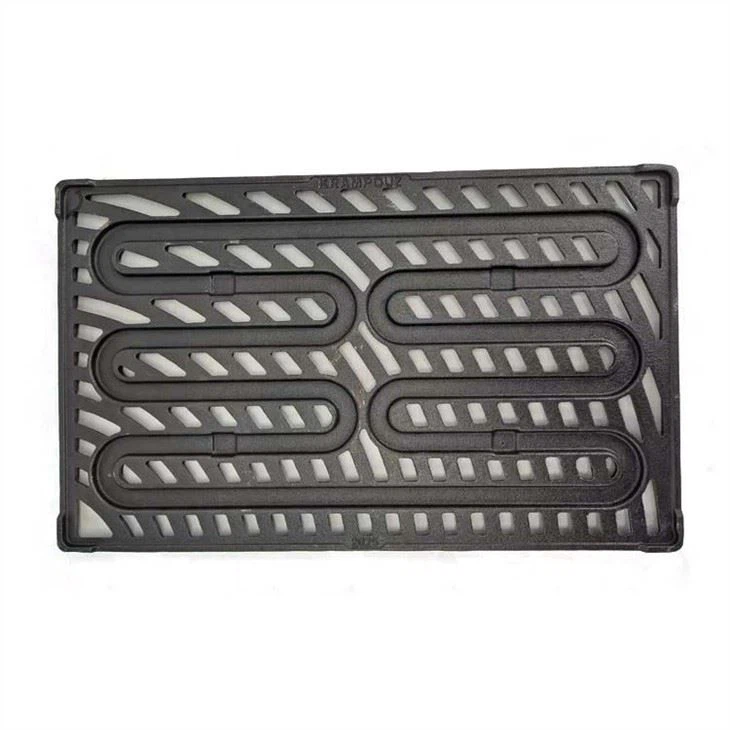
 

  • Cast Iron Bakeware

    Cast Iron Bakeware

    Our Cast Iron bakeware comply with EU Regulation NO 1935/2004, DGCCRF Inorganic Material Data

    Add to Inquiry
Why Choose Us


Quality Assurance
In addition to the conventional measuring tools such as durometer and projector, we also have advanced measuring equipment such as ZEISS CMM, universal testing machine to meet the advanced measurement requirements of product size and material.
The professional QC team also enables us to check the quality of each batch of products in the factory to ensure the quality of each batch of products delivered.


Experience and expertise
The technicist, salesman and inspector in our team have rich professional knowledge and business experience. All of them are focused on providing the custom with products worth every penny.


Quality Services
Continuously providing product/service to customer in U.S.A, Canada, Germany, England etc. more than 20 years. We supply to many famous companies in the World like LEGRAND, LEMKEN, ABB, RHEEM, ZURN, WATTS etc.


Types Of Bakeware
 

Cast iron bakeware

Cast iron bakeware are popular due to their excellent heat retention and even distribution. They are known for creating crisp grill marks and great sears, adding a little extra flavor to the food.
Cast iron pans do require proper seasoning and maintenance to prevent rust and maintain their nonstick surface, but they're relatively easy to care for. They're also super durable and can withstand high heat, making them suitable for a variety of cooking methods, including stovetop grilling, stovetop-to-oven recipes and even using on your grill.

Nonstick bakeware

Nonstick bakeware are made with a coating that prevents food from sticking to the surface. This type of pan is easy to clean and requires less oil or fat for cooking.
Nonstick pans are ideal for delicate foods like fish and vegetables. However, they may not achieve the same level of sear and grill marks as cast iron pans. Also, it's important to use utensils that won't scratch the nonstick coating to maintain its longevity.
Many nonstick bakeware are made of an aluminum base, which offers excellent heat conductivity and makes them lightweight—not to mention easy to handle and maneuver.

Stainless steel bakeware

Stainless steel bakeware offer durability and a sleek appearance. They heat up quickly and distribute heat evenly, ensuring consistent cooking results.
Stainless steel pans are known for their versatility, as they can be used on various stovetop types and in the oven. One drawback is that they don't retain heat as well as cast iron pans, and they require a little more preparation and technique to ensure food doesn't stick to them.

Bakeware with lids

Some bakeware come with a matching lid or a detachable cover. The lid helps to trap heat and moisture, creating a more oven-like environment for cooking. It can be beneficial for achieving a more tender and evenly cooked result, especially for thicker cuts of meat, as well as anything that requires steaming (which is great for fish and veggies).
Ultimately, the type of grill pan you choose depends on your personal preferences, cooking style and budget. Each type offers its own set of advantages, so consider your needs and desired cooking outcomes when selecting the grill pan that suits you best.


Common Uses Of A Bakeware

Grilling Meat: Bakeware are excellent for grilling various types of meat, including burgers, chicken breasts, and sausages. The raised ridges on the pan create grill marks and help drain excess fat away from the meat.

Grilling Seafood: You can use a bakeware to grill seafood such as shrimp, fish fillets, scallops, and squid. The grill marks add visual appeal and a smoky flavor.

Grilling Vegetables: Bakeware are perfect for grilling vegetables like bell peppers, zucchini, eggplant, asparagus, and corn on the cob. The grill marks enhance the appearance and flavor of the vegetables.

Grilling Fruit: You can grill fruits like peaches, pineapples, and watermelon on a bakeware. Grilling caramelizes the natural sugars in the fruit and enhances their sweetness.

Bread and Pizza: Bakeware can be used to toast or grill bread, pita, and flatbreads. You can also use them to make small-sized grilled pizzas.
Browning: Bakeware are excellent for browning foods like mushrooms, onions, and garlic, adding depth of flavor to your dishes.

Searing: Bakeware can be used to sear meats and seafood before finishing them in the oven. This is a common technique for achieving a flavorful crust on steaks and roasts.

Kebabs

While not traditional for kebabs, bakeware can be used to cook skewered meats and vegetables indoors, allowing you to enjoy this popular dish without an outdoor grill.

Bringing Grill Marks to Leftovers

If you have leftover cooked meats or vegetables, you can use a bakeware to reheat them and add grill marks for a fresh appearance.

Reduced-Fat Cooking

Bakeware typically require less oil or fat for cooking, making them a healthier option compared to traditional frying pans.


The Ultimate Guide to Choosing the Right Bakeware for Every Recipe
Cast Iron Bakeware 2
Cast Iron Bakeware
Cast Iron Bakeware
Cast Iron Bakeware 2

Size and Shape
Size indeed matters when it comes to selecting bakeware types. It's crucial to consider the size of your tray about the recipe's specifications to ensure optimal cooking results. Beyond size, the shape of the tray plays a crucial role.
While rectangle trays offer versatility, round trays are indispensable for specific recipes like homemade pizza. Incorporating specialty shapes, such as heart-shaped trays for Valentine's Day, can bring an element of joy to your baking endeavors.
Remember that the depth of your tray also impacts the outcome of your baked goods. Shallow trays are ideal for cookies, whereas deeper trays are better suited for cakes and casseroles.
By choosing the right size, shape, and depth of your bakeware, you can elevate your baking game to new heights and create delectable treats with precision and flair.


Coating
A coating on your bakeware surface can also make a significant difference in the result of your baked goods. Non-stick coatings, such as Teflon or silicone, are popular choices for their ease of use and cleaning. They can wear off over time and release harmful chemicals at high temperatures.
Natural coatings, such as oil or butter, may not have the same non-stick properties but are safer and can also add flavor to your baked goods. It's important to regularly check the condition of your coating and replace it when necessary to ensure food safety.


Rimmed vs. Rimless
Rimmed bakeware, also known as baking sheets. These are baking essentials with their raised edges that come in handy for containing any drippings or oils. This can ensure a mess-free cooking experience.
These trays are perfect for roasting a variety of vegetables to caramelized perfection or achieving crispy, flavorful bacon with ease. On the other hand, rimless trays offer a different kind of versatility in the kitchen. They are the preferred choice for baking multiple batches of cookies.
This allows for even heat distribution and consistent baking results. These rimless trays are ideal for effortlessly transferring a homemade pizza onto a preheated stone in the oven, ensuring that coveted crispy crust that pizza enthusiasts crave.


Dual-Purpose Trays
Why limit yourself to just one function when you can enjoy the versatility of multiple options? For instance, some innovative bakeware offer a removable rack that aids in cooling. It also helps drain excess fat while you roast your favorite meats or veggies to perfection.
On the other hand, there are trays designed as combination trays. This features both shallow and deep sections, catering to a wide range of culinary creations. You might come across adjustable trays that boast the flexibility to change sizes.
With this, it can accommodate different oven dimensions or even divide into convenient compartments for baking an array of delectable treats simultaneously.


Our Company


Vitech Development Limited has been focusing on product design, development and OEM products which are used widely in all commercial, industrial and civil fields.
We are professional in many of the markets in which we operate and are distinguished by high quality service and innovative design based on the drawing, even an idea.
We stick to the fact from the beginning that the competitive pricing and quality are the starting points of all business.
The technicist, salesman and inspector in our team have rich professional knowledge and business experience. All of them are focused on providing the custom with products worth every penny.


productcate-1-1


Asked Questions


Q: How does a bakeware work?

A: When you put, say, a steak on a grill pan, the parts directly in contact with the metal absorb a tremendous amount of heat—the heat going into the bottom of the pan from the burner is all conducted into the ridges, thus square-inch for square-inch, the parts of the meat actually in contact with metal will cook much ...

Q: How do I keep my bakeware from rusting?

A: The easiest way to make sure your grill grates do not rust is to clean the grease and food particles away after every cook! Remember to put a light coat of oil on your cooking grids after cleaning to prevent them from rusting, and keep them seasoned.

Q: What are the benefits of a bakeware?

A: Consistent Results. Bakeware provide a reliable cooking experience so your dishes are consistently cooked to perfection, complete with grill marks.
Easy Cleanup. Most grill pans are non-stick, making cleanup a breeze, and they're typically dishwasher-safe.
Healthy Cooking.

Q: What do you cook on a bakeware?

A: White meat: Chow down on tender, flavorful grilled chicken, turkey and pork. Seafood: From water to table, seafood fare like salmon, shrimp, scallops are made better with a grill pan. Sandwiches: Whip up all-time favorites like ooey-gooey grilled cheese, or the perfect panini.

Q: How do you keep bakeware clean?

A: After Each Use. To clean your gas grill, first, turn your grill up to high and let it heat for several minutes. This will loosen burnt-on gunk on the grates. Then, turn it off and let it cool a bit before scraping food debris off the warm grates with your grill brush.

Q: Why is my bakeware turning my food black?

A: First, the black specks you see coming off into your food are not harmful. They are most likely carbon deposits. This happens due to overheating of fats and oils. Using an oil with a low smoke point will carbonize at high temperatures and cause residue from the pores of your pan to rub off onto your food.

Q: Is it okay to grill on rusty grates?

A: Rusty grill grates can infuse your food with a bitter, metallic flavor and season it with inedible speckles. That's why switching to a rust-proof material like stainless steel is probably a smart move.

Q: What is the difference between a bakeware and a hot plate?

A: Hotplates have flat surfaces heated from below, producing a dry heat that cooks food evenly in its fat. Grills have raised ridges that help funnel oil and fats away from the food itself, applying direct heat.

Q: Do grill grates go flat side up or down?

A: The wider, flat side of the cooking grates should be facing upwards for cast iron grates. The underside is more pointed like the top of a triangle. There are four small legs in each corner on the underside of the grate to ensure a level cooking surface. This will help stabilize the food.

Q: What do you use a bakeware for?

A: A grill pan is similar to a frying pan but differs in its distinctive grill lines on the surface of the pan. These grill lines serve a few different purposes, including adding char marks, colour, and texture to the dish. These grill lines are typically 1-2cm high, searing food evenly and draining excess fat.

Q: What are BBQ plates coated with?

A: If you have just purchased a high-quality barbecue, your hotplates are most likely to be coated with vitreous enamel and will just require a gentle wash with soapy water. Those with uncoated hotplates are recommended to season the surfaces to prevent any rust.

Q: What is the difference between a bakeware and a frying pan?

A: A frypan can sear, sauté, shallow-fry, and braise foods, making it ideal for cooking things like eggs, or reheating small amounts of liquid. A grill pan is defined by its ridges, and specializes in searing foods by grilling it.

Q: Can you use bakeware on stove?

A: Cast-iron grill pans are good for stovetop grilling because they hold heat well and give your food classic grill marks. If you don't have a grill pan, you can use a regular pan or skillet, but your food won't have the grill marks.

Q: How do you use a bakeware?

A: Once you place the food onto your grill pan, you shouldn't flip it or move it for about a minute. By leaving it in place, you'll help create those sear/grill marks that add so much character to your food. Rotate or move your food after a minute or two if needed.

Q: How do you remove carbon buildup from bakeware?

A: Heat up the bakeware for 15 minutes, to carbonize grime and food debris. Turn the grill off, disconnect the tank. After cooling, scrub all the carbon you can from the grates with the wire brush that has been dipped in soapy water. Remove anything else from the grill and scrub the grates and panels thoroughly.

Q: What can I use to clean my bakeware?

A: The method: Remove cooled grates from the grill. Put them in a garbage bag and add 2 cups of vinegar and 1 cup of baking soda. Close up the bag and let the solution soak for 8 hours or overnight. Then, rinse the grates and scrub off any remaining food bits, using a ball of foil or a scrubby sponge.

Q: How to ruin a bakeware?

A: You don't allow time for the pan to heat up. ...
You use the same bakeware for savory and sweet. ...
You don't clean the pan quickly enough. ...
You let your bakeware soak. ...
You don't re-season the bakeware. ...
You store the bakeware while it's still wet.

Q: Can you ruin a bakeware by scrubbing it with a?

A: If your bakeware requires a more aggressive cleanse, we recommend using a chainmail scrubber. It's important to not use anything too aggressive such as steel wool, sponges or other abrasive cleaning methods as these will strip your seasoning.

Q: Should I oil my cast iron after every use?

A: You should season a bakeware at least once a month, but seasoning it after each time you cook with it also works. You may not need to repeat the entire seasoning process as you did before initially using it, but after each use, rinse it and give your bakeware a quick season by oiling it.

Q: Why is food sticking to my bakeware?

A: Occasionally food may stick to your bakeware. This can happen for a variety of reasons, such as not using enough fat or oil when cooking, using cookware that isn't well seasoned, or when breaking in new cookware that hasn't built up additional layers of seasoning.

We're professional bakeware manufacturers and suppliers in China, specialized in providing high quality OEM service. We warmly welcome you to wholesale customized bakeware at competitive price from our factory.

Bakeware Accessories, Cookware Handle, Cookware Accessories
goTop

(0/10)

clearall